
The application of large density damping of putsmier in the shock absorption and noise reduction of armored vehicles
As the well deserved king of land battle in the modern ground battlefield, tank can form an unstoppable situation in the front line, effectively support the infantry and destroy the solid defense lines and fortifications with its heavy armor, super powerful artillery and high-powered engine. It is an indispensable heavy fire mobile support platform for the army; however, such a weapon with many advantages also has some defects in use, especially the huge noise and vibration of the mechanical equipment itself, which cannot be overcome by the existing technology.
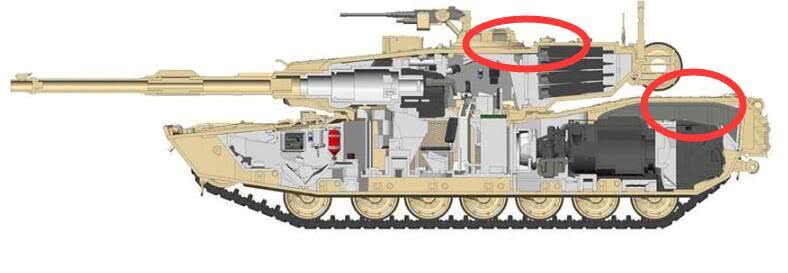
Tank noise mainly comes from engine, suspension system and track, which is easy to be detected by acoustic sensor. So in the process of running the tank, the members of the vehicle group have to bear a lot of noise, and the working environment is relatively bad; the noise source comes from the engine and artillery; the internal operating environment of the modern tank is much better than that of the previous tank, which greatly improves the operating environment of the tank soldiers, and improves the combat ability, even though the level of tank automation and information technology is constantly improving, Moreover, the built-in air conditioner and air purifier ensure the comfort of the members, but it is undeniable that the tank crew must work in a certain noise, high temperature and suppressed environment. At present, the interior noise pollution of armored vehicles produced and equipped in our country is serious. The measurement results show that the maximum noise level of tracked armored vehicles can reach 120dB, and the noise level increases with the increase of vehicle speed. The harm of internal noise of armored vehicles must be paid great attention to, and great efforts must be made to solve the problem of reducing the internal noise of armored vehicles, which is of great significance to protect the combatants, improve the combat effectiveness, and give full play to the combat effectiveness of weapons and equipment. The vibration of engine is the main noise source in armored vehicles. The vibration and noise signals in the vehicle are analyzed by frequency analysis and coherence analysis, The characteristic frequency of vibration isolation and noise reduction characteristics in armored vehicles is obtained. The sound absorption structure with putsmier damping reinforcement and design damping through relevant measures to improve tank structure can effectively reduce the structural noise of armored vehicles. For example, the design of muffler introduces damping and sound insulation materials or devices, such as the use of oil-gas suspension device to prevent vibration, reduce vibration and noise; the use of rubber loaded wheel And rubber padded tracks and so on.
9. Application effect of viscoelastic damping treatment in vibration reduction and noise reduction
1. It is the fundamental starting point of damping and vibration reduction to suppress the resonance peak value, which has its special application in many occasions. The resonance response can be greatly reduced, so as to achieve the purpose of vibration reduction.
2. Improve the high-frequency vibration isolation effect of the vibration reduction system, reduce the solid (or structure) transmission noise, and the structural noise is extremely prominent in the high-rise buildings, workshops, vehicles, ships, instrument and equipment supports, which is caused by the high-frequency standing wave effect inside the vibration isolation seat, and its solution There are two: one is to increase the damping and mass; the other is to adopt the elastic sandwich double-layer vibration isolation and "floating construction" structure, in which the viscoelastic damping treatment is a very effective method, which can suppress multiple resonance peaks after increasing the damping.
3. Reduce the surface vibration and secondary excitation noise of light components. For some large-scale unit's spoke plate, shell or disk structure, when excited, it is necessary to not only excite the secondary noise, but also transmit the vibration to some lighter and thinner components to arouse local resonance and noise. The most effective way to solve this problem is to use composite damping steel plate or to damp the vibration surface.
4. To strengthen and improve the performance of sound insulation structure, the sound insulation cover has been widely used in noise control at home and abroad. According to the sound insulation quality law, it is often difficult to use light thin-walled structure to achieve satisfactory wrinkle. This is because resonance "low frequency failure" occurs at low edge and "coincidence effect" occurs at high frequency, which greatly reduces the actual sound insulation effect of the sound insulation cover. Increasing the loss factor of sound insulation components can significantly improve the sound insulation, which is the main basis for damping materials used in light sound insulation components. At present, viscoelastic damping materials have been widely used in light-weight sound insulation covers.