
Introduction
With the rapid development of modern navigation, aviation and aerospace industry, the power and the degree of attack of the ship and aircraft system are greatly improved, which results in strong broadband random vibration and noise. These broadband sources will excite the multi peak resonance of ship, aircraft structure and electronic equipment, which makes the vibration problems they encounter more complex. This is because the structural fatigue damage caused by resonance response and the phenomenon of electronic equipment failure caused by excessive vibration acceleration become more serious. If these problems can not be solved properly, the light will affect the performance of electronic equipment, shorten the fatigue life; the heavy will cause serious faults, or even failure.
As early as the early 1950s, the composite damping structure with viscoelastic material as core layer has been used in aerospace engineering to reduce vibration and noise. Over the past 60 years, a lot of work has been done in theory and practice abroad, and widely used in various low-noise product design, environmental pollution control and labor protection projects. In the mid-1970s, the research and practice of this technology began in China. Its role and potential in vibration reduction and noise reduction attracted the attention of various industrial enterprises, environmental protection departments and relevant design and operation departments, and it has been rapidly developed and widely used.
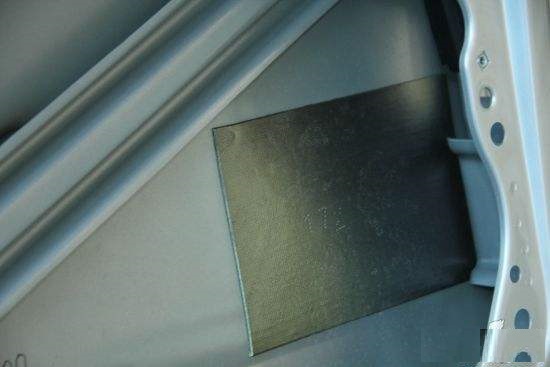
1、 Principle of damping vibration reduction and noise reduction
Damping is the ability to dissipate vibration energy, It is to change the energy of mechanical vibration and acoustic vibration into heat energy or other expendable energy, so as to achieve the purpose of vibration reduction and noise reduction. The inherent damping of common metal materials, such as steel, aluminum, copper, etc., is very small. Therefore, the method of adding damping materials is often used to increase its damping, so that the vibration energy transmitted along the structure is rapidly attenuated. Damping material is a kind of material with internal loss and internal friction control. Environmental viscoelastic material is widely used, including plastic and rubber, and non environmental damping material based on asphalt.
The reason why damping measures can reduce noise is that damping can weaken the bending vibration strength of metal components. When the metal component is bent and vibrated, the vibration energy is transmitted to the damping material which is coated on it quickly, causing friction and mutual dislocation within the damping material, making a considerable part of the vibration energy become heat energy and be lost, so as to reduce the noise energy radiated by the bending vibration. In addition, damping can shorten the vibration time of the metal components, which is equivalent to reducing the total energy of the radiated noise of the metal components, so as to control the noise.
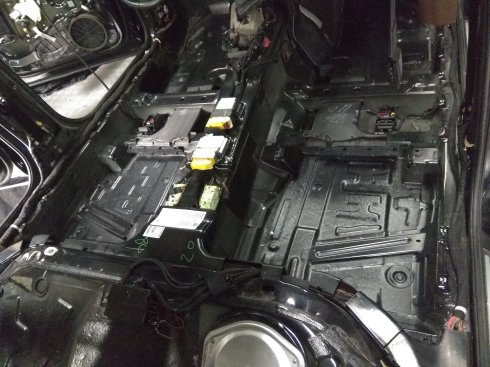
The purpose of vibration reduction and noise reduction is to stick damping plate on metal sheet metal of passenger car
2、 Environmental requirements of damping materials for passenger cars
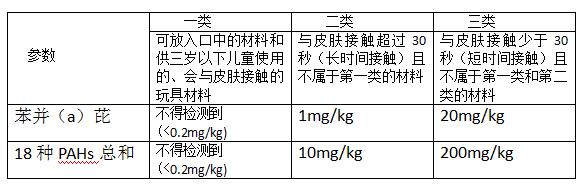
1. PAHs content limit
PAHs content limits in accessible surface materials (by risk analysis results)
2. Limit requirements for toxic and harmful substances
Each automobile factory has made corresponding regulations on the limit values of toxic and harmful substances such as heavy metals, mainly involving the SGS requirements for the following substances (the attached table is at the end of this document)

The main engine plants of each automobile have a clear limit on the content of benzene and aldehyde. As there is no unified national standard, the standard limits of different automobile plants are slightly different. However, the VOC emission of damping materials are strictly regulated, such as the VOC limit of an automobile factory

4. Requirements for odor and total carbon emission
According to Hg / t4384-2012 industry standard, odor / min ≤ 4.0; total carbon emission ≤ 50 μ g / g;
5. Difference between environmental protection damping plate and asphalt damping plate
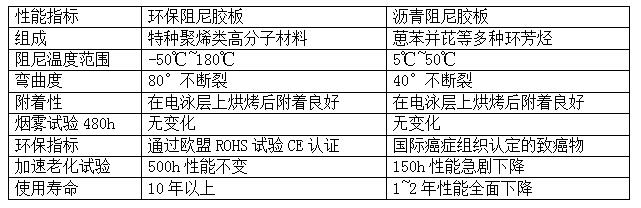
There are essential differences between the environmental protection damping plate and the asphalt damping plate. The environmental protection damping plate and the asphalt damping plate have essential differences in the raw materials. The environmental protection damping plate generally uses special polyolefin polymer materials, while the asphalt damping plate uses aromatics such as 葸 and benzopyrene as the raw materials, which is the petroleum waste.
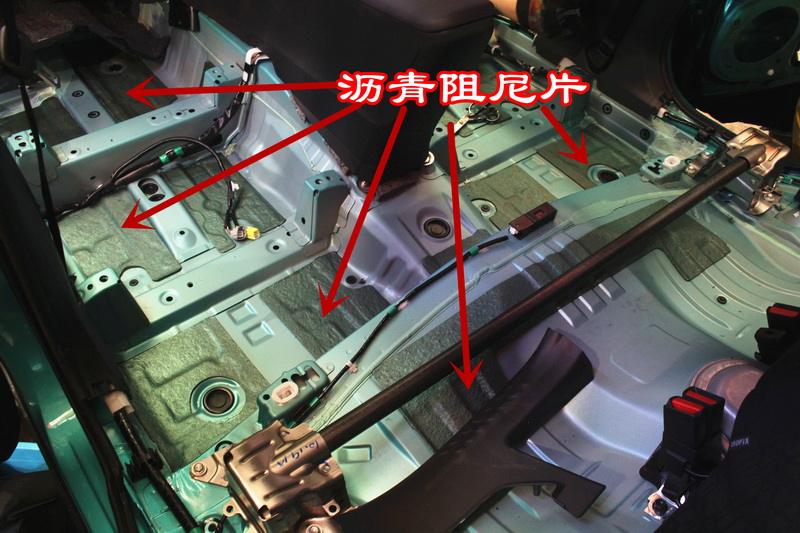
In order to reduce the cost, many domestic vehicles use asphalt damping
5.1 difference between environmental protection damper and asphalt damper
These two kinds of damping plates are different in performance, and our most concerned about environmental protection, aging and service life, environmental protection damping plate is undoubtedly more excellent. In terms of environmental protection, the international cancer organization has identified benzopyrene and other substances as carcinogens, while the polyolefin polymer material has passed the EU ROHS test, and it is considered that the substance is harmless to human body. In the accelerated thermal aging test, the performance of asphalt damping plate drops sharply at 150 hours, and it will release harmful substances when heated. In addition, the performance of asphalt damping plate will be reduced in 2-3 years.
5.2 the International Center for cancer research (IARC) has long listed coal tar pitch as one of the 95 substances with sufficient evidence of carcinogenicity to human beings. In 1999, the former Ministry of building materials issued a document (No. 295, 1999) which stipulated that it was strictly prohibited to use asphalt materials in residential waterproof materials, because of environmental pollution.
5.3 however, there is no mandatory regulation to restrict the use of asphalt in vehicles in China, so it is still very common for domestic vehicles and imported vehicles sold in China to use asphalt damper. A wide range of damping material production has become a new industry. The major chemical industry companies in the world are manufacturing and selling damping materials, such as 3M company in the United States, ear company, sound coater company) Ciba-Geigy company in the United Kingdom, etc. In China, putsmier precision Aviation Equipment Co., Ltd. is also developing and producing damping materials. Environmental friendly butyl rubber is used as raw material to produce damping products for vehicle damping system.