
Recently, the news that "multiple luxury car brands use carcinogenic materials" has become a new hot spot of car owners' attention, probably the most important reason is the direct damage to consumers' health. But will the use of asphalt damper in automobile cause cancer to users? And what kind of damage?

First of all, let's introduce what is damper? The term may not be familiar to many people. Damping sheet is a kind of viscoelastic material attached to the inner surface of the car body, which is mainly used to reduce noise and vibration, that is to say, damping. Generally, all cars are equipped with damping plates. At the same time, like the clutch, damping plates are also used. In addition, damping plates are also used in aerospace vehicles, airplanes and other machines that need shock absorption and noise reduction. Generally, there are several kinds of materials that can be used as damping sheet, such as rubber material, polymer resin material and asphalt material used by most manufacturers at present. Take a car as an example. There are eight to twelve places that need to be pasted with this kind of damper. Most of them are located in the closed car cab, with a total area of about 3 square meters and a total amount of asphalt material of more than ten kilograms.
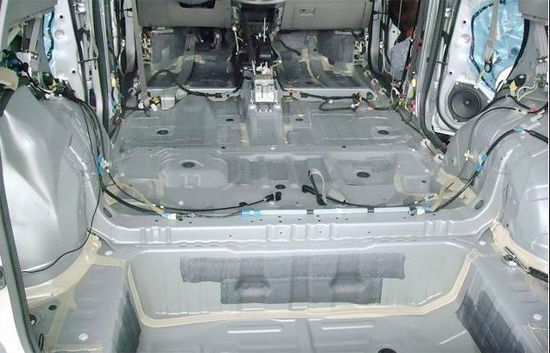
What are these materials? What are the advantages of using these materials?
Generally speaking, the damper made of polymer or rubber material has stable physical and chemical properties, excellent vibration and noise reduction, heat resistance, cold resistance, aging resistance and strong adhesion. It has no irritating effect on human skin and no corrosive effect on metal, plastic, rubber and other materials. At present, some automobile and construction machinery began to use more environmentally friendly water-based damping coating products, which has superior vibration and noise reduction performance. At present, in the developed countries of automobile industry such as Europe and the United States, polymer or rubber materials are generally used as automobile damping plates.
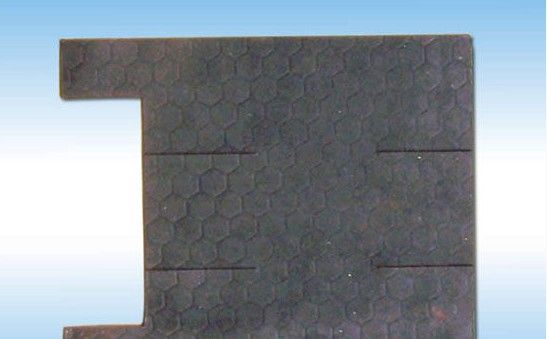
This is the black damper
In addition, the asphalt material used by most domestic manufacturers is a dark brown complex mixture composed of hydrocarbons with different molecular weight and their non-metallic derivatives, which is liquid, semi-solid or solid. It is a waterproof, moisture-proof and anti-corrosion organic cementitious material, which mainly comes from coal and oil. Used in coating, plastic, rubber and other industries as well as pavement. It mainly includes four kinds of natural asphalt, petroleum asphalt, shale asphalt and coal tar asphalt. The main components are asphaltene and resin, followed by high boiling point mineral oil and a small amount of oxygen, sulfur and nitrogen compounds. It is glossy, in liquid, semi-solid or solid state, brittle at low temperature, with good adhesion and corrosion resistance. Because of the sun exposure and engine heat dissipation, the asphalt damper close to the steel plate is easy to decompose and release toxic polycyclic aromatic hydrocarbons.
A new term polycyclic aromatic hydrocarbon gas is introduced here. It is an aromatic compound containing more than one benzene ring, which is produced in industrial production, pyrolysis or incomplete combustion of organic matters, many of which have been proved to be carcinogenic. The main 18 PAHs are naphthalene, acenaphthene, acenaphthene, fluorene, phenanthrene, fluoranthene, pyrene, benzo (a) anthracene, benzo (b) fluoranthene, benzo (k) fluoranthene, benzo (a) pyrene, Indeno (1,2,3-cd) pyrene, dibenzo (a, H) anthracene and benzo (g, h, I) perylene, 1-methylnai and 2-methylnai.
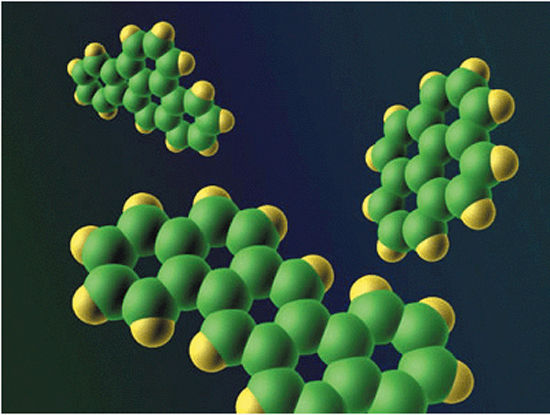
3D simulation of polycyclic aromatic hydrocarbons
According to the relevant data, the improper application of asphalt material causes serious cancer. But its cost is lower than that of polymer or rubber, which is its advantage.
Is the use of asphalt material damping plate will certainly cause cancer? Does the state have relevant regulations?
According to the data collected by the editor, up to now, the state has not stipulated some of these auto accessories, but the air quality in the car is regulated. From March 1, 2012, the guidelines for air quality assessment in passenger cars jointly issued by the Ministry of environmental protection and the AQSIQ began to be implemented. The guidelines set clear concentration standards for eight indicators of air in passenger cars (including benzene, toluene, xylene, ethylbenzene, styrene, formaldehyde, acetaldehyde and acrolein). The following are relevant data stipulated by the state:
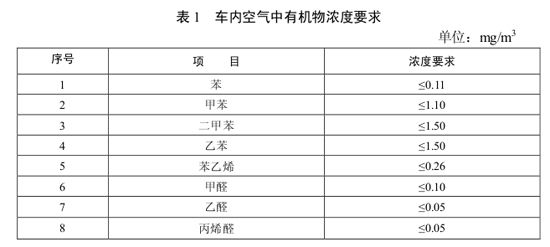
Of course, if the damper with asphalt is directly contacted by human body, rather than by air, the impact will certainly be more serious. According to these questions, the editor consulted some experts. Experts said that at present, the state has not made detailed regulations on auxiliary parts such as damping plates, but they do not rule out relevant regulations to be issued in the near future. At the same time, they said that the application of these materials need not be generalized. If the asphalt damping plates are applied in places that are not connected with the vehicle interior, the impact on the air inside the vehicle is not great, and the vehicle construction cost can be saved; however If it is directly applied in the car or the place connected with the car, if it is used excessively, it may cause great harm to the body. Mainly because the car is exposed to the sun for a long time, when the temperature reaches a certain level, these materials will release some harmful gases. Last year, the guidelines for the evaluation of air quality in passenger vehicles jointly issued by the Ministry of environmental protection and the AQSIQ stipulated that there were eight substances in the air quality in vehicles, but none of them contained the compounds in PAHs.

The above picture shows a damping film made by a damping manufacturer for some automobile brands exposed on the Internet
The following table is a standard for some manufacturers that require damping plates. (non national regulations or industry standards)
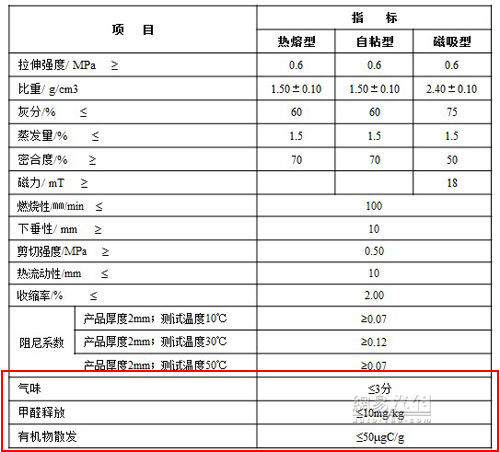
As can be seen from the above figure, according to the requirements of the production standards of different manufacturers, the formaldehyde content must be less than 10mg / kg, and the volatile content must be less than 1.5%. The standard required by some manufacturers is far lower than the national air standard.
In addition, asphalt damper has different indexes, which are mainly divided into hot-melt type, self-adhesive type and magnetic absorption type. The following is a process of a production company. You can see the difference between the two indicators.
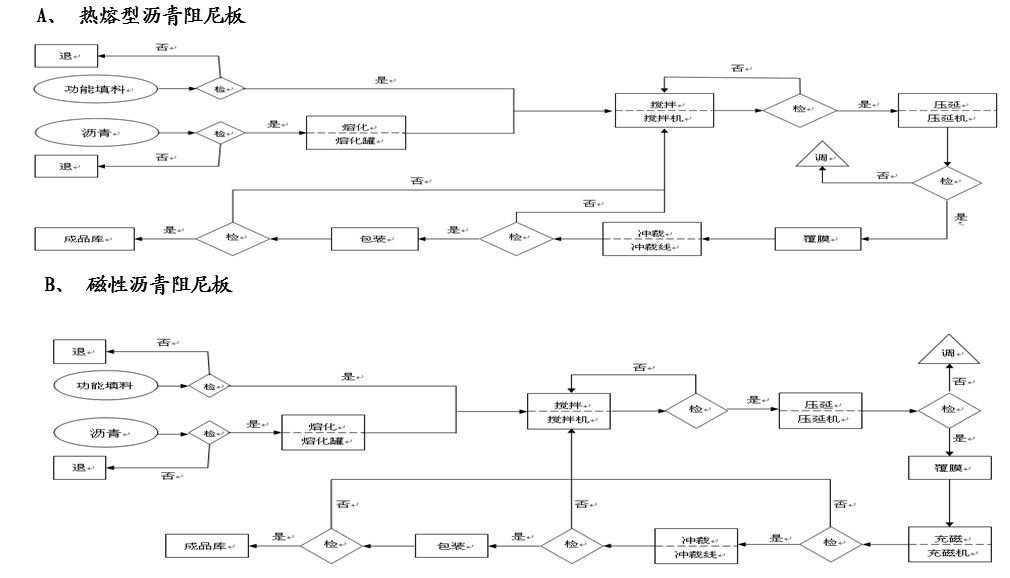
Most domestic vehicles use 70 asphalt, which is mainly divided into coal tar asphalt, petroleum asphalt and natural asphalt, used for road construction. However, it is widely used in the parts connected with the vehicle. As long as the improper application and the excessive formaldehyde content in the asphalt are used, and the volatile content reaches a certain degree, it will have a great impact on the human body.
Finally, from a personal point of view, I feel that sometimes there is a distinct smell in the car. Apart from the damping material produced by bituminous materials, synthetic leather, plastic pads, inferior perfume and so on are all important sources of air pollution inside the vehicle. At the same time, smoking in the car often has a significant effect on the air in the car. At present, it needs to be verified by some authorities whether the vehicles on the market are carcinogenic due to the use of asphalt damping plates. At present, it is hoped that the state will issue more perfect corresponding laws and regulations as soon as possible to enforce requirements to ensure the health of consumers.